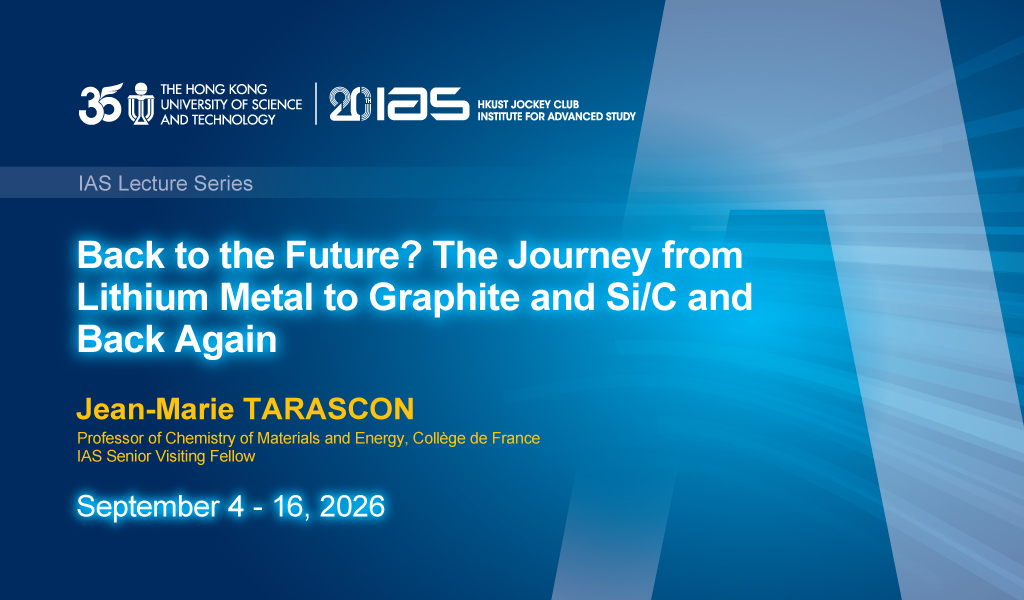
Back to the Future? The Journey from Lithium Metal to Graphite and Si/C and Back Again


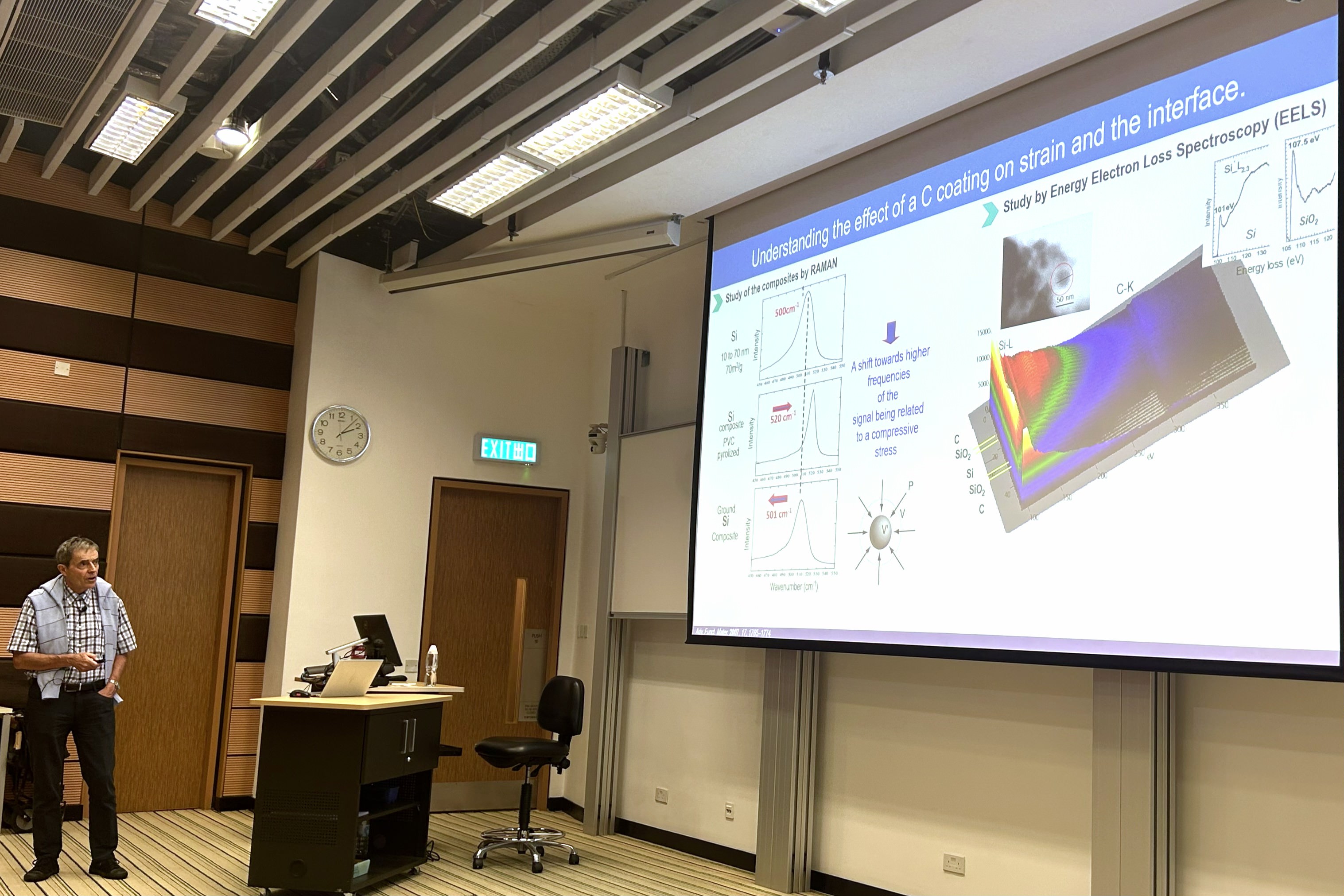
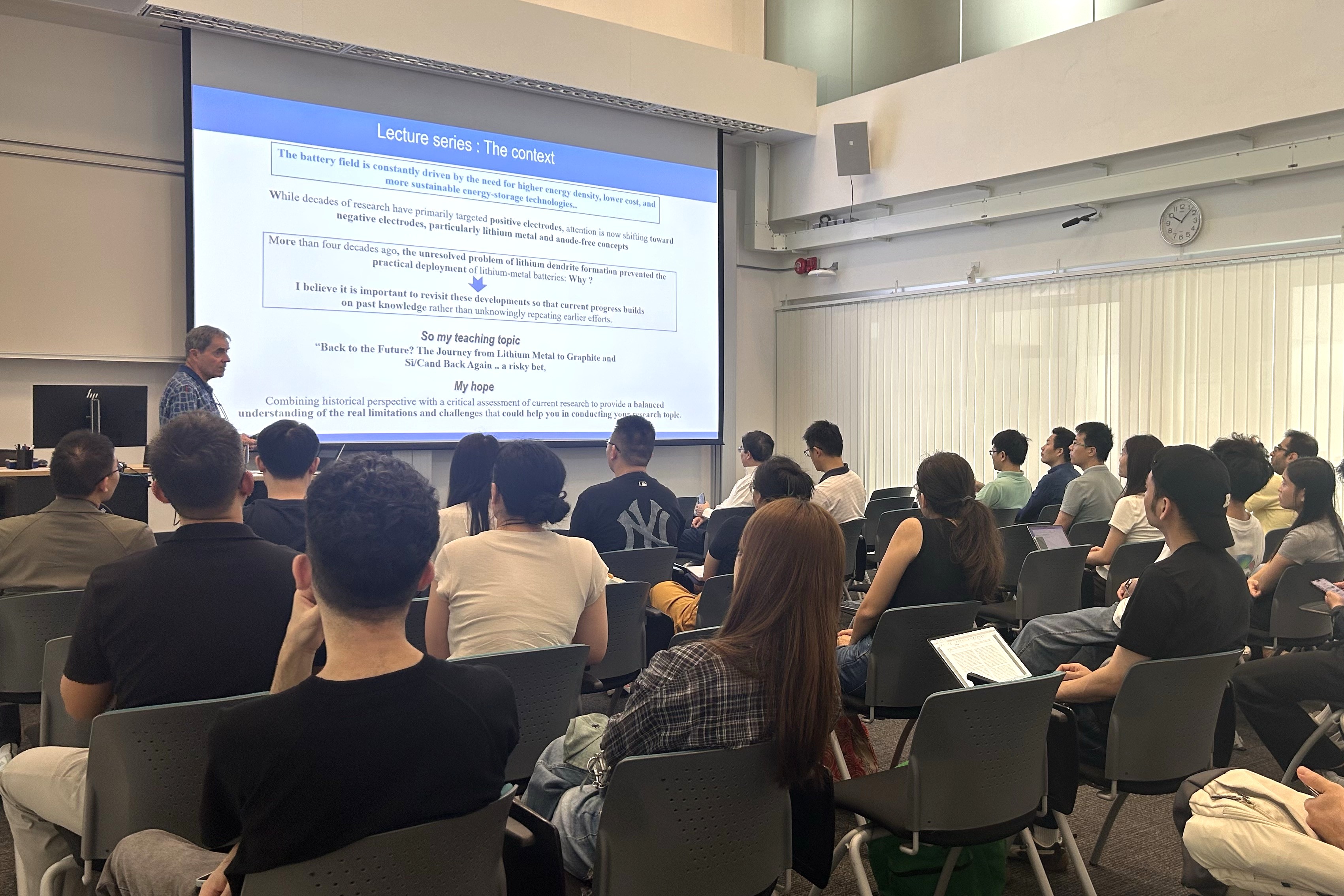
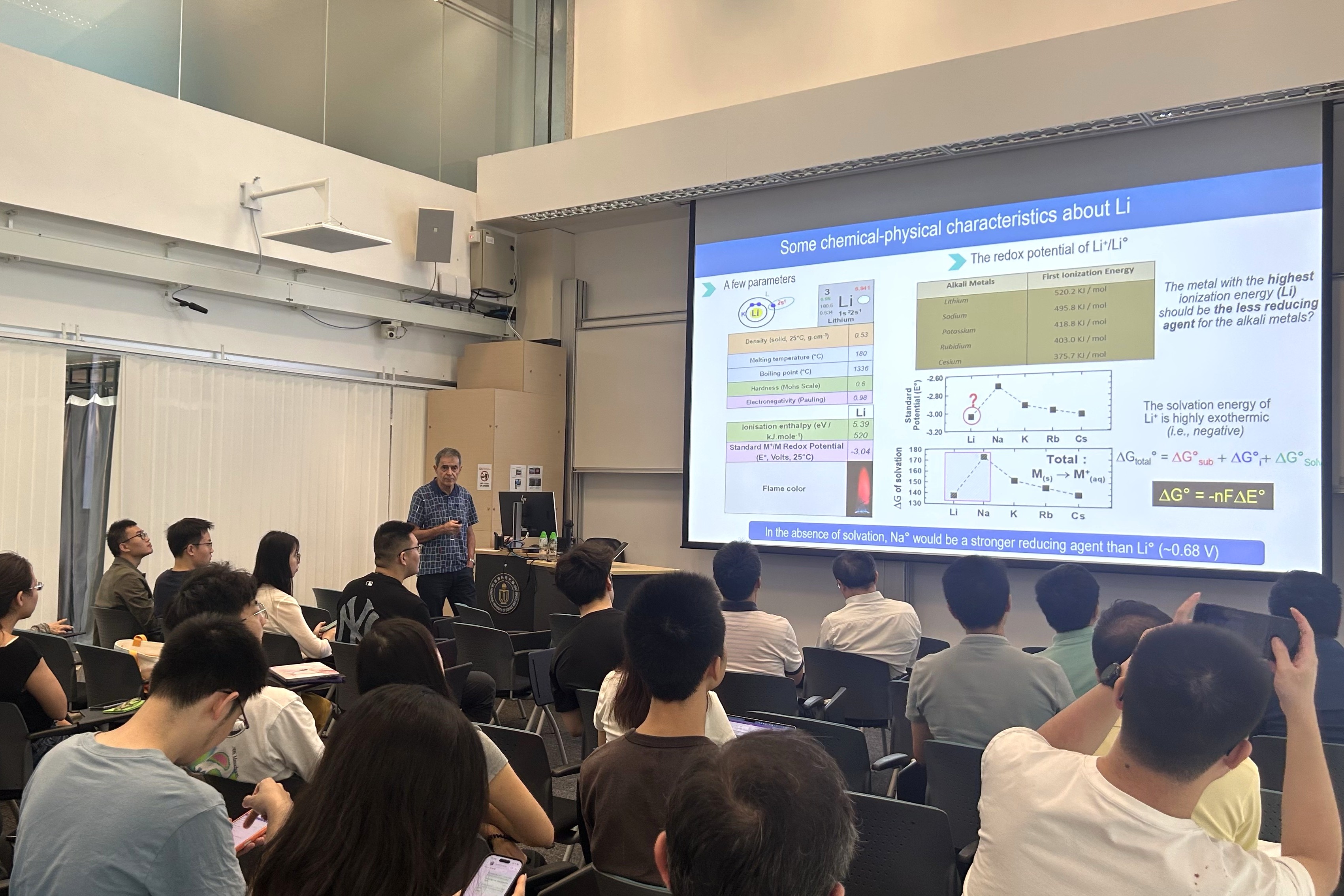
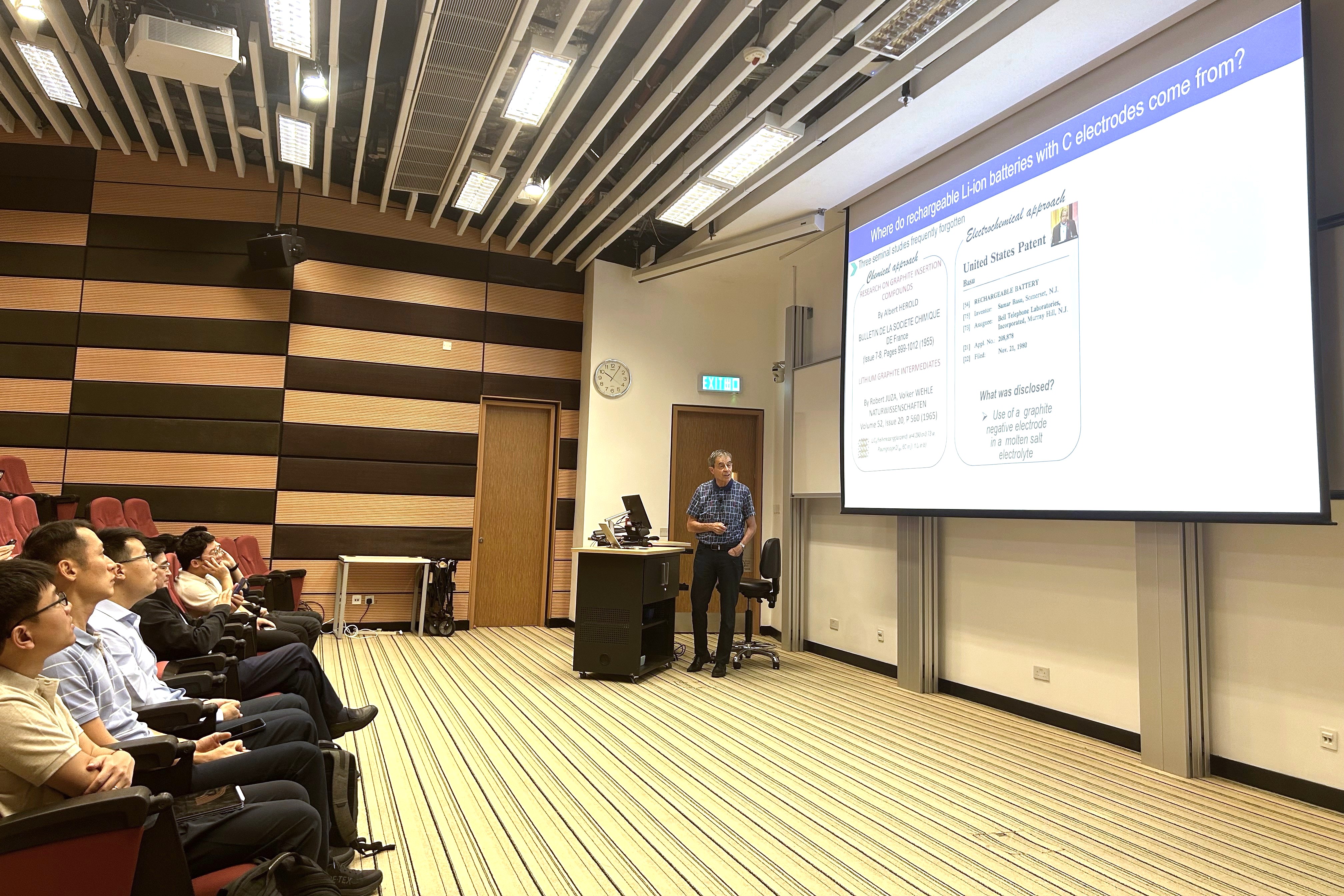
Please note the Lecture on September 16, 2026 (Wed) has been relocated to Kaisa Group Lecture Theater (IAS LT), Lo Ka Chung Building, Lee Shau Kee Campus.
Abstract
The battery field is undergoing a profound transformation, driven by the need for higher energy density, lower cost, and more sustainable energy-storage technologies. Besides solid state batteries, current research increasingly focuses on dry-electrode manufacturing and greener chemistries, including Na-ion and aqueous Zn–MnO₂ systems. While decades of research have primarily targeted positive electrodes, attention is now shifting toward negative electrodes, particularly lithium metal and anode-free concepts. This renewed interest is historically significant. More than four decades ago, the unresolved problem of lithium dendrite formation prevented the practical deployment of lithium-metal batteries and contributed to the emergence of Li-ion technology. Having witnessed part of this pioneering period firsthand, it is important to revisit these developments so that current progress builds on past knowledge rather than unknowingly repeating earlier efforts. Despite major advances in operando and in situ characterization, achieving uniform lithium (Na or Zn) plating and stripping remains a fundamental challenge. This lecture series will begin with an in-depth examination of pioneering lithium-metal battery research, particularly the seminal contributions of Moli Energy and Exxon. It will then trace the evolution of negative electrodes from carbonaceous materials to natural and synthetic graphite and, more recently, silicon/carbon composites. The lectures will finally address the renewed interest in lithium- and sodium-metal anodes and anode-free cell architectures, emphasizing the intrinsic scientific and technological bottlenecks that still limit practical implementation. Recent studies often report elegant performance improvements, yet may understate the fundamental limitations governing long-term operation under realistic cell conditions and practical engineering constraints today. By combining historical perspective with a critical assessment of current research, the lectures will provide students with a balanced understanding of the opportunities, limitations, and future prospects of next-generation negative-electrode technologies.
Schedule
Lecture 1: Lithium-Metal Anodes: Early Developments, Challenges, and Lessons Learned
Date: September 4, 2026 (Fri)
Time: 10:00 - 11:30 am
Lecture 2: From Lithium Metal to Carbonaceous Materials, Graphite, and Si/C Composite Anodes: A Lengthy Transition
Date: September 10, 2026 (Thu)
Time: 10:00 - 11:30 am
Venue: Kaisa Group Lecture Theater (IAS LT), Lo Ka Chung Building, Lee Shau Kee Campus
Lecture 3: The Resurgence of Lithium-Metal Anodes: Inherent Challenges and the Enthusiastic Shift Toward Anode-Free Technologies
Date: September 16, 2026 (Wed)
Time: 2:00 - 3:30 pm
Venue: Kaisa Group Lecture Theater (IAS LT), Lo Ka Chung Building, Lee Shau Kee Campus
About the Speaker
Prof. Jean-Marie Tarascon received his PhD in Solid State Chemistry from the University of Bordeaux in 1981. He furthered his career in Bell Communications Research, Inc. (Bellcore) in 1983 and moved to the University of Picardie Jules Verne in 1995. In 2010, Prof. Tarascon joined the Collège de France and is currently a Professor of Chemistry of Materials and Energy. He is also the Director of the Research Network on Electrochemical Energy Storage, a research and technology transfer network devoted to energy storage devices initiated by the French Ministry of Higher Education and Research.
Prof. Tarascon’s research focuses on the development of new techniques for the synthesis of new electronic materials (superconductors, ferroelectrics, fluoride glasses and rechargeable batteries materials) for new solid state electronic devices, and for relating crystal structure to electronic, optical, and magnetic properties. His work has primarily focused on some electronic properties of Chevrel phases as well as their ability to insert alkali ions. He has made outstanding contributions in the field of superconductivity and was the original proponent of the thin and flexible plastic Li-ion battery based on a strong and highly resistant hybrid polymer system that is presently commercialized. As the head of the Institute of Chemistry of Picardie and coordinator of the European Research Institute for battery research (ALISTORE-ERI), he is exploiting new Li reactivity concepts such as conversion or displacement reactions, and novel electrodes designs for the next generation of Li-ion batteries based on nano-electrodes/electrolyte components.
Prof. Tarascon was elected a Foreign Member of the Royal Society of London, a Member of the American Chemical Society, a Member of Electrochemical Society and a Member of Materials Research Society. He is the holder or author of about 69 patents and more than 520 publications, as well as the recipient of a number of awards, which include the Centenary Prize by the Royal Society of Chemistry (2015), the Pierre Süe Prize by the French Chemical Society (2011), the Eni Award for Environment Protection (2011), the Gold Medal by University of Picardie Jules Verne (2008) and the Europe Section Alessandro Volta Medal by the Electrochemical Society (2002).
For Attendees' Attention
Seating is on a first come, first served basis.