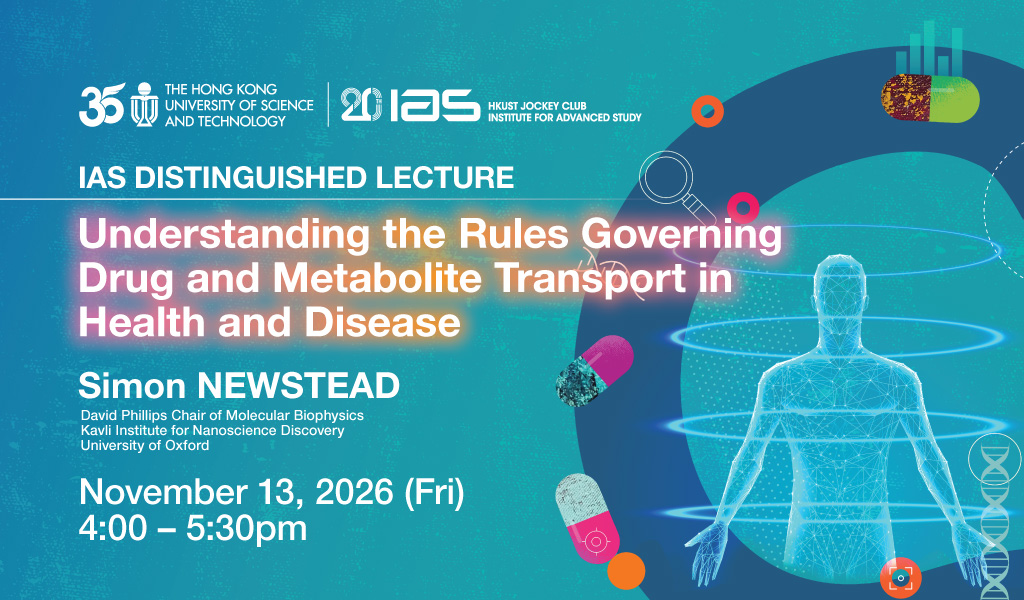
Understanding the Rules Governing Drug and Metabolite Transport in Health and Disease


Abstract
The selective movement of molecules across cellular membranes is fundamental to life, enabling cells to exchange materials with their environment, store energy, and communicate. Membrane transport mechanisms are among the least understood areas of cell biology and offer significant opportunities to advance drug design and develop new therapeutic interventions for various human diseases. The speaker's research focuses on elucidating the molecular mechanisms of solute carrier (SLC) proteins, which constitute the second-largest family of integral membrane proteins in the human genome and serve as the primary gatekeepers for metabolite and ion exchange across all biological membranes. More recently, SLCs have emerged as essential yet poorly understood lysosomal signalling systems, in contrast to better-characterised systems such as G protein-coupled receptors. The speaker's goal is to discover the rules governing SLC function in cells and the human body and to apply our insights to translational research and fundamental science.
About the Speaker
Prof. Simon NEWSTEAD is a British structural biochemist who pioneered structural studies of membrane proteins, particularly the transport of drugs and metabolites into cells and organs. After earning a PhD at the University of St Andrews and completing a postdoctoral fellowship at Imperial College London, he established his own research group in the Department of Structural Biology at the University of Oxford. His work focuses on the mechanisms of pH-driven drug and metabolite transport systems relevant to human health and disease. In 2022, he was appointed to the David Phillips Chair in Molecular Biophysics and now leads the structural biology research theme within Oxford Biochemistry.
Prof. Newstead is internationally recognised for establishing the mechanisms underlying the transport of peptides, amino acids, vitamins, and hormones via SLC transporters. His recent research has expanded to examine the roles of SLC proteins in cellular communication, with a focus on neurodegeneration, inflammation, cancer, and chronic pain. Since 2014, Prof. Newstead has been a Wellcome Investigator.
For Attendees' Attention
Seating is on a first come, first served basis.
Event Information