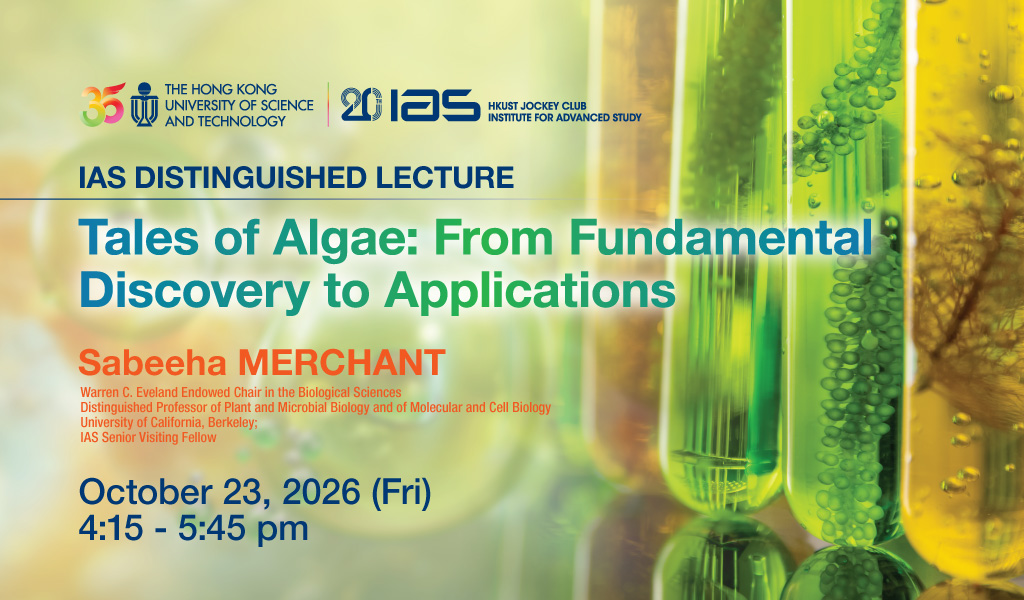
Tales of Algae: From Fundamental Discovery to Applications


Abstract
Although Chlamydomonas is the most well-known “model” organism, other green algae present interesting physiologies for investigation or offer experimental advantages for research. Advances in genome sequencing and gene editing make it possible to exploit these algae as experimental models in the laboratory. Therefore, in addition to the Chlamydomonas genome, the group has assembled genomes for Dunaliella spp., Chromochloris zofingiensis and Auxenochlorella protothecoides. Some examples of fundamental discoveries based in these experimental systems are offered.
Polycistronic mRNAs, previously thought to be restricted to prokaryotes, were discovered in each of these nuclear genomes. Bioinformatics and mutational analysis suggest that leaky ribosome scanning provides the main mechanism for translating two open reading frames from a single mRNA molecule. (Work of Marco Dueñas, Sean Gallaher, Rory Craig and Jeff Moseley (1).)
Dunaliella spp. are halotolerant extremophiles and have been cultivated for valuable bioproducts. Systems analysis of Fe-deficiency in two divergent species from the Sinai Peninsula (D. salina) or Oslofjord (D. tertiolecta) suggested compositional variation in Photosystem I, which motivated structural analysis and revealed a novel pattern of light-harvesting antenna organization. (Work of Lital Davidi, Sean Gallaher, Helen Liu, Radhika Khera and Masa Iwai (2,3).)
Homologous recombination is facile in A. protothecoides, which opens the door to classic reverse genetic approaches for deducing and testing specific hypotheses. The organism is a prolific accumulator of triacylglycerols, suggesting that it can be engineered to produce fats for food applications. We have tailored the fatty acid and TAG profile of A. protothecoides to mimic the unique composition of human milk fat, including regioisomeric distribution of the major TAG species. (Work of Jon Lin and Jeff Moseley.)
These stories exemplify the contributions to basic and applied research of studies using simple unicellular organisms.
References:
1. Dueñas, M. A., Craig, R. J., Gallaher, S. D., Moseley, J. L., and Merchant, S. S. (2025) Leaky ribosomal scanning enables tunable translation of bicistronic ORFs in green algae. PNAS
2. Liu, H. W., Khera, R., Grob, P., Gallaher, S. D., Purvine, S. O., Nicora, C. D., Lipton, M. S., Niyogi, K. K., Nogales, E., Iwai, M., and Merchant, S. S. (2025) Fe starvation induces a second LHCI tetramer to photosystem I in green algae. PNAS
3. Davidi, L., Gallaher, S. D., Ben-David, E., Purvine, S. O., Fillmore, T. L., Nicora, C. D., Craig, R. J., Schmollinger, S., Roje, S., Blaby-Haas, C. E., Auber, R. P., Wisecaver, J. H., and Merchant, S. S. (2023) Pumping iron: A multi-omics analysis of two extremophilic algae reveals iron economy management. PNAS
About the Speaker
Prof. Sabeeha Merchant earned her BS in Molecular Biology in 1979 and her PhD in Biochemistry in 1983, both from the University of Wisconsin. She then joined Harvard University as a Research Fellow (1984–1987). In 1987 she moved to the University of California, Los Angeles, rising from Assistant Professor to Distinguished Professor of Chemistry and Biochemistry. She joined the University of California, Berkeley in 2018 and holds the Warren C. Eveland Endowed Chair in the Biological Sciences. She serves as BBS Division Head and is affiliated with the Departments of Molecular and Cell Biology and Plant and Microbial Biology, as well as Lawrence Berkeley National Laboratory. She is also an External Member of the Max Planck Institute of Molecular Plant Physiology.
Prof. Merchant and her research group have made fundamental discoveries on how photosynthetic organisms acquire, recycle and store essential trace metals. Using the green alga Chlamydomonas reinhardtii, she showed that copper limitation triggers replacement of the copper protein plastocyanin with a heme-containing cytochrome, releasing copper for reuse in respiration. Her laboratory has extended this “reduce, reuse and recycle” logic to iron and other metals, and now combines genetics, transcriptomics, proteomics and high-resolution metal imaging to map metal homeostasis. A second theme uses comparative genomics of green algae, including extremophiles, to uncover new components of photosynthesis and chloroplast biology.
Prof. Merchant is an elected member of the US National Academy of Sciences (2012), the American Academy of Arts and Sciences (2014), the Max Planck Society (2015) and the German National Academy of Sciences Leopoldina (2016). She is a Fellow of the American Association for the Advancement of Science and of the American Society of Plant Biologists. Her honors and awards include the Gilbert Morgan Smith Medal of the US National Academy of Sciences (2006), the Charles F. Kettering Award of the American Society of Plant Biologists (2010), the Charles Albert Shull Award (1999), an NIH MERIT Award, a Guggenheim Fellowship, a Humboldt Research Award (2012), and appointment as a Gordon and Betty Moore Investigator in Aquatic Symbiosis (2020). She served as Editor-in-Chief of The Plant Cell (2015–2019) and has been Editor of the Annual Review of Plant Biology since 2003; she is Vice-Chair of the Annual Reviews Board of Directors (since 2025).
For Attendees' Attention
Seating is on a first come, first served basis.
Event Information