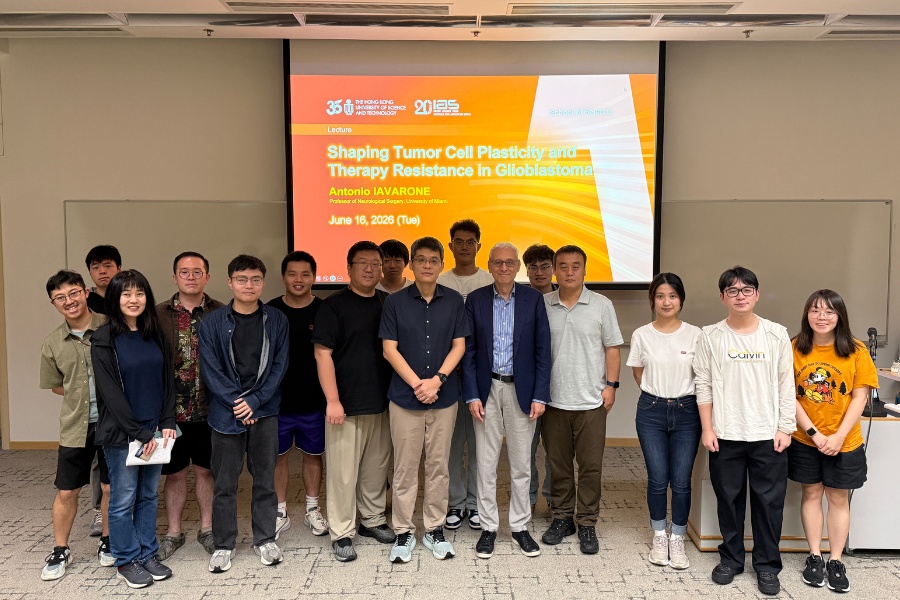
Shaping Tumor Cell Plasticity and Therapy Resistance in Glioblastoma


Abstract
Tumor heterogeneity fueled by plasticity and genetic diversification of cancer cells is key to therapy failure of malignant glioma. The speaker's team implemented spatial and genetic platforms at single cell resolution to explore the trajectory of evolution of glioblastoma. Using spatial analysis of whole glioblastoma sections, the team established a homotypic clustered cell identity paradigm whereby tumor cell state coherence was maximal in cells organized in homotypic clusters, whereas dispersed cells downregulated the original state, acquired alternative phenotypes and exhibited changes in the microenvironment, thus linking the process of plasticity to loss of the cell adhesion mechanisms that preserve the clustered spatial pattern of glioblastoma cells. The team also used single cell DNA-sequencing methods integrated with the single cell transcriptome of patient-matched primary-recurrent glioblastoma pairs to resolve the clonal substructure of untreated glioblastoma and determine the clonal evolution at recurrence driven by therapeutic resistance. The evolutionary trajectory of glioblastoma identified a bottleneck model as the predominant pattern of evolution and converged on the identification of a rare persister subclonal state in primary glioblastoma exhibiting distinct phenotypic hallmarks that evolves and diversifies to populate the recurrent tumor mass. The team used preclinical tumor models to trace the individual lineages associated with the persister subclones and experimentally illuminated the biological and metabolic activities of the persister cellular state in brain tumors. Persister glioblastoma cells in untreated tumors lacked spatial segregation and were independent predictors of timing to recurrence for glioblastoma patients. Thus, genetic and non-genetic co-evolution mechanisms forge the acquisition of plasticity and therapy resistance in glioblastoma.
About the Speaker
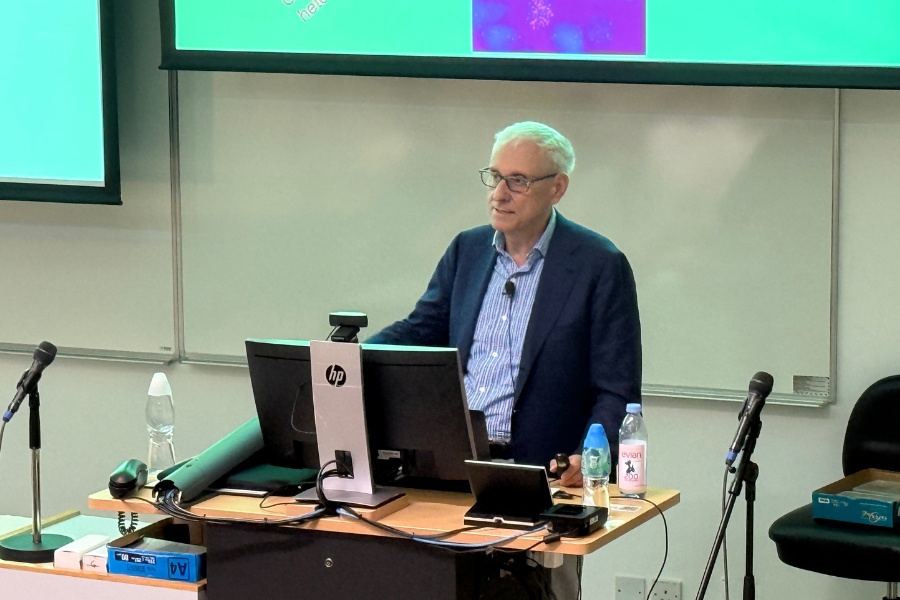
Prof. Antonio IAVARONE is Professor of Neurological Surgery, the Deputy Director of the Sylvester Comprehensive Cancer Center and the Director of the Sylvester Brain Tumor Institute at the University of Miami where he leads a lab composed of experimental and computational biologists working alongside clinician-scientists. By focusing on pediatric and adult brain tumors, the Iavarone lab has dissected the genetic and non-genetic mechanisms marking initiation and progression of cancer from normal brain.
Prof. Iavarone discovered FGFR–TACC gene fusions, the most frequent gene fusion across human tumors. He uncovered a fusion-linked metabolic program-increased mitochondrial respiration-that creates vulnerabilities, providing a mechanistic rationale for biomarker-driven therapeutic strategies and therapies for cancers. He established that brain tumors are maintained by discrete, regulatable cell states enforced by identifiable driver lesions and “master” regulatory programs. His early studies defined core principles of cell-cycle and lineage control relevant to oncogenesis, including ID proteins as retinoblastoma-linked effectors and mechanisms coupling cell-cycle exit to neuronal differentiation.
Prof. Iavarone brought systems-level approaches into neuro-oncology by defining transcriptional modules that initiate and sustain mesenchymal transformation, a key driver of aggressiveness and treatment failure. He led/co-led large-scale efforts integrating multi-omics into tumor taxonomies. His pathway-based glioblastoma classification uncovered a mitochondrial subtype with therapeutic liabilities, and network-based analyses nominated candidate master kinases and regulators supporting rational combination strategies. Complementing this, his work in NF1-associated glioma defined the molecular landscape of a clinically challenging population, enabling precision diagnostics and risk-informed management for sporadic and genetically predisposed cancer of the brain.
For Attendees' Attention
Seating is on a first come, first served basis.