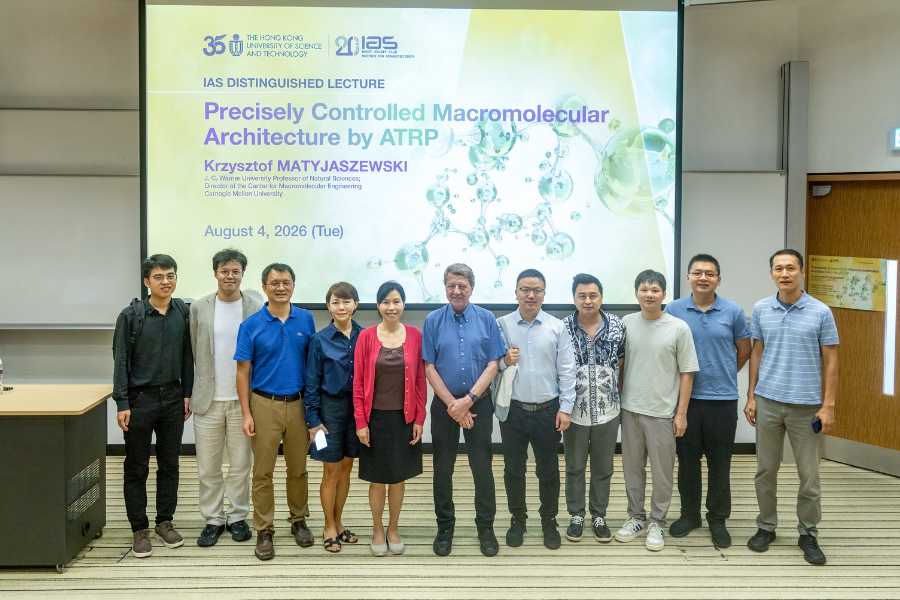
Precisely Controlled Macromolecular Architecture by ATRP


Abstract
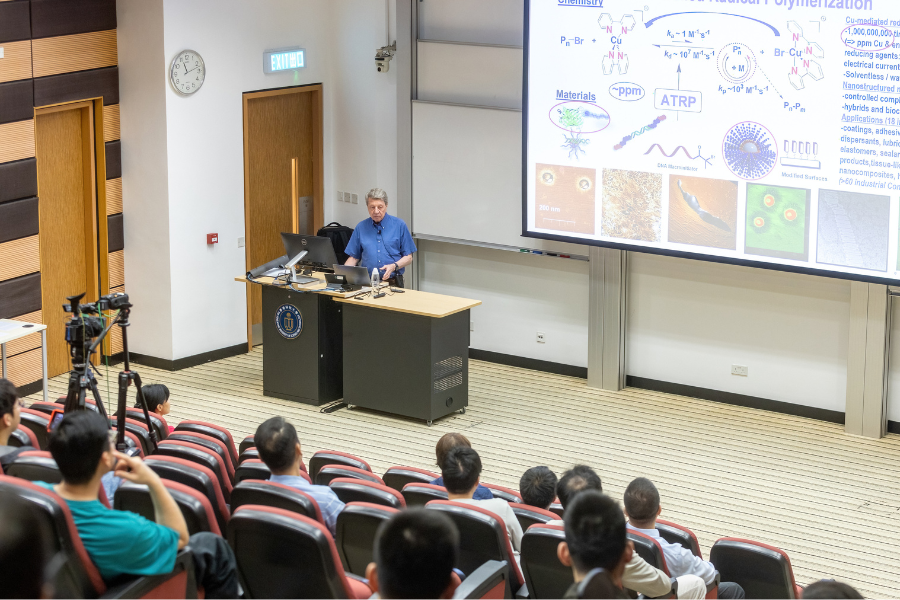
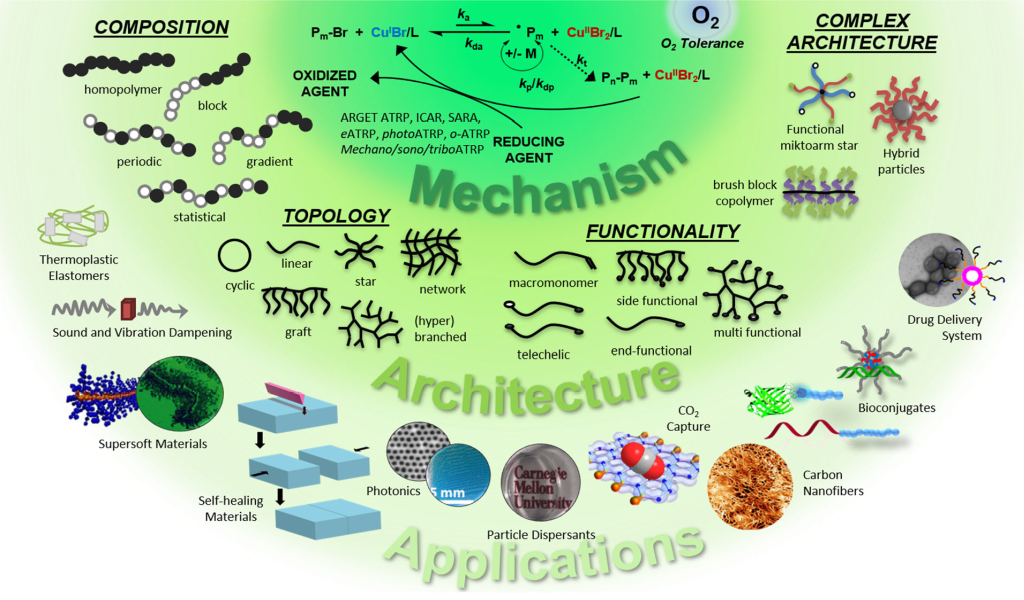
Various well-defined polymers with precisely controlled macromolecular architecture were prepared under environmentally benign conditions, with ppm of catalysts, in an aqueous environment, and in open-air with temporal control by light, electrical current, mechanical forces, or benign chemicals such as ascorbic acid. The dynamic exchange between active radicals and dormant species catalyzed by ppm amounts of copper catalyst in atom transfer radical polymerization (ATRP) or by degenerative transfer (RAFT) enabled access to uniform star, comb, bottlebrush, or cyclic polymers with controlled chain composition, such as block, gradient, or periodic structures. Macromolecular engineering provided access to designed bioconjugates by covalently linking synthetic polymers with proteins or nucleic acids (DNA and RNA) and attaching polymers to inorganic surfaces such as nanoparticles or flat wafers. Such well-defined polymers and hybrid materials outperform conventional commercial products; they can self-assemble, selfrepair, depolymerize back to monomers, and respond to external stimuli. They find applications in the areas of biomedicine, environment, and energy.
About the Speaker
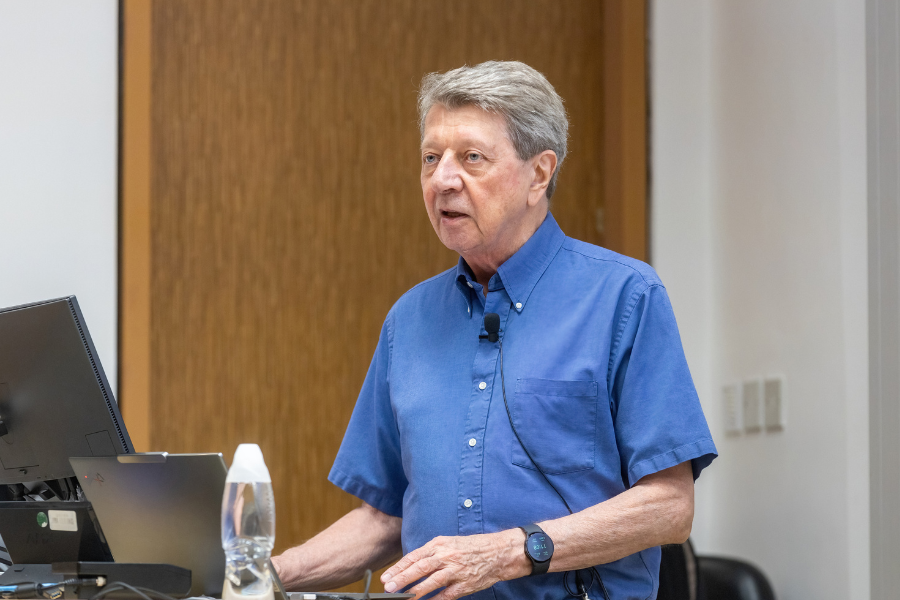
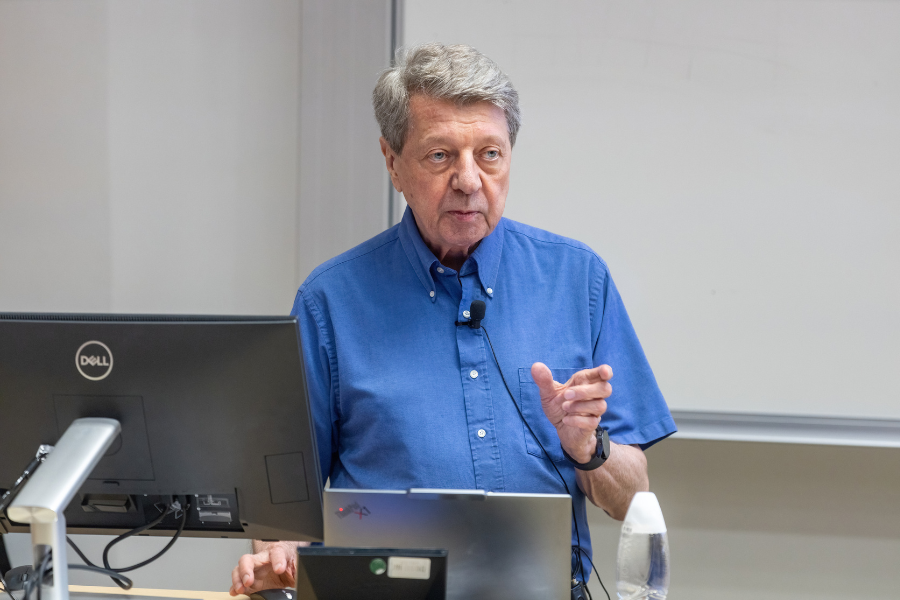
Prof. Krzysztof MATYJASZEWSKI received his PhD from the Polish Academy of Sciences in 1976, followed by a postdoctoral fellowship at the University of Florida in 1977. His early professional years were spent as a research associate with the Polish Academy of Sciences from 1978 to 1984. His international academic experience expanded with appointments at the University of Paris in 1984 and 1985, initially as a research associate and subsequently as a visiting professor. In 1985, Prof. Matyjaszewski joined Carnegie Mellon University, where he not only founded but also continues to direct the Center for Macromolecular Engineering. His academic recognition at Carnegie Mellon includes his appointment as the J. C. Warner Professor of Natural Sciences in 1998, and in 2004, he achieved the University Professor distinction, the highest faculty honor bestowed by the institution.
Prof. Matyjaszewski's research has revolutionized the field of polymer synthesis, particularly through his pioneering work on Atom Transfer Radical Polymerization (ATRP). He formed a research consortium with various industrial corporations to expand the understanding of controlled radical polymerization, including ATRP, and accelerate the transfer of this technology to different commercial applications. A second consortium, formed under his leadership in 2001, continues and expands these efforts, training university and industrial scientists in procedures for responsive polymeric material development. 62 companies from Europe, Asia and North America have been members of these consortia. He is a co-inventor on 72 issued US patented technologies, holds 154 international patents and has over 30 US patent applications pending approval.
The immense contributions of Prof. Matyjaszewski to polymer science have been recognized with a multitude of prestigious awards and honors. He was elected Fellow of the American Chemical Society and of the US National Academy of Inventors. He is also a member of the US National Academy of Engineering, the US National Academy of Sciences, and numerous international academies, including those in Europe, Australia, Poland, Hungary, and Georgia. His exceptional achievements have garnered him numerous top-tier accolades, including the 2026 Progress in Polymer Science Career Award by Elsevier, the 2025 Lehn International Chemistry Award in Polymer Science by FLOGEN Star Outreach, and the 2025 Kavli Innovation in Chemistry Award by the American Chemical Society. Further recognition includes the 2024 Honorary Fellow by the Polish Chemical Society, the 2023 US National Academy of Sciences Award in Chemical Sciences, the 2021 Grand Prix de la Fondation de la Maison de la Chimie, the 2017 Benjamin Franklin Medal in Chemistry, the 2015 Dreyfus Prize in Chemical Sciences, and the highly esteemed 2011 Wolf Prize in Chemistry. He is also a recipient of the 2009 Presidential Green Chemistry Challenge Award, six major awards from the American Chemical Society, and thirteen doctorates honoris causa, underscoring the global recognition of his transformative career.
For Attendees' Attention
Seating is on a first come, first served basis.